Stroller 101: How to pick the best stroller in 2026
Travel systems, lightweight strollers, jogging strollers and double strollers - a simple guide to picking the stroller in 2026 that fits how you actually plan to use it.
Start with how you’ll actually use it
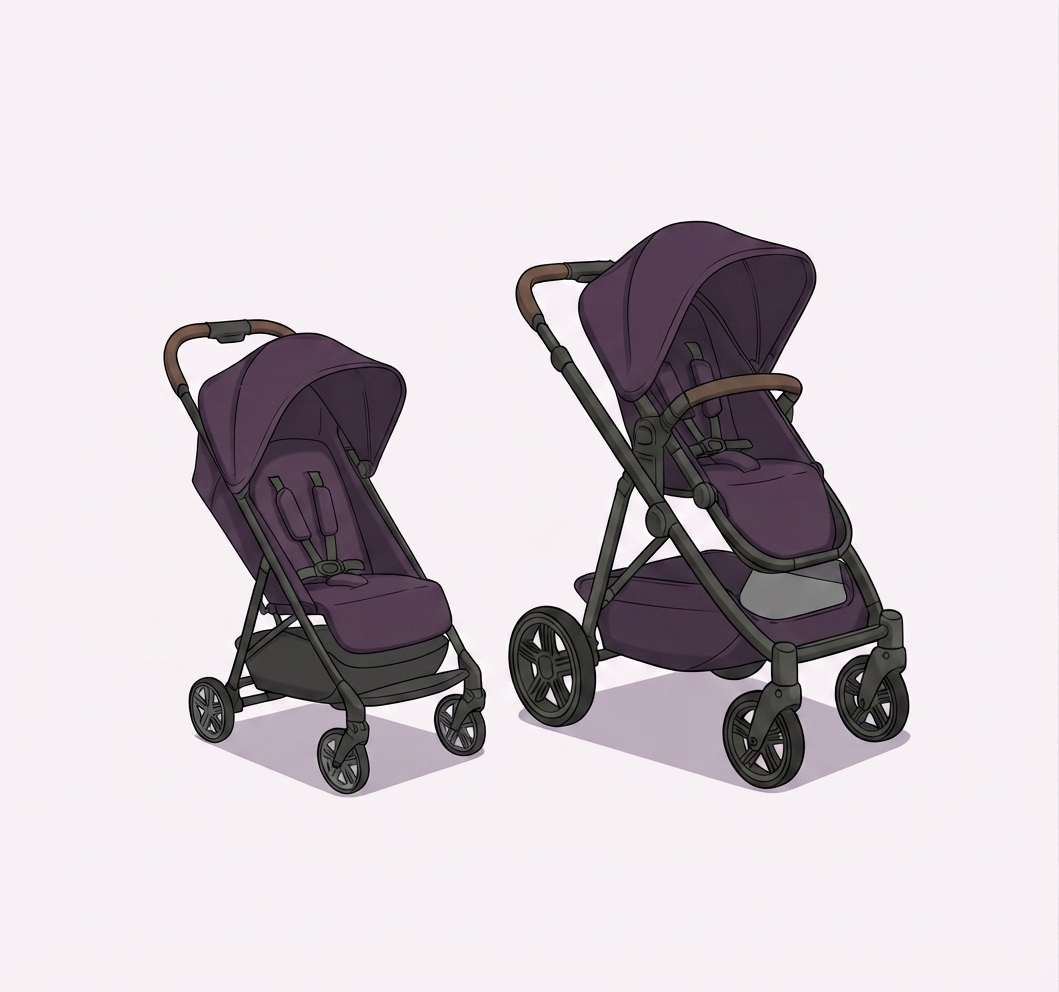
Before comparing models, think about where the stroller actually lives day to day - the trunk of a small car, an apartment hallway, a stroller hook by the front door. A stroller that's perfect on paper but too bulky for your space or your car will end up unused. Also think about terrain: sidewalks and malls need very different wheels than gravel trails or cobblestones.
Travel System Strollers
A travel system pairs a stroller frame with an infant car seat that clicks in and out, so newborn trips don't require waking the baby to transfer them. This is the most popular first stroller for a reason - it covers the newborn stage and usually converts to a standalone stroller once the baby outgrows the infant seat. The tradeoff is size: travel systems tend to be heavier and bulkier than other categories. If you have a car seat but like a specific stroller from a different brand, you can buy adapters to make them work together.
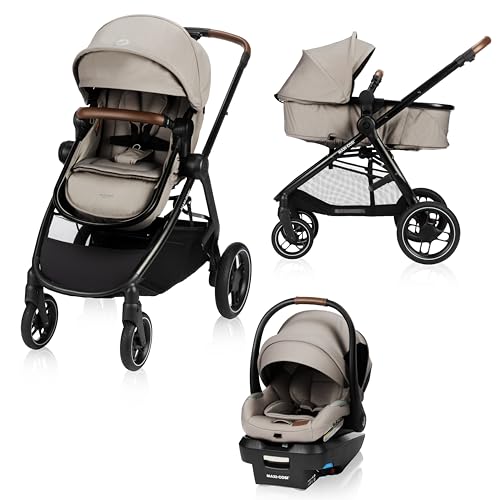
Maxi-Cosi New Generation Zelia Luxe 5-in-1 Modular Travel System, Carriage Mode, Reversible Toddler Seat, Mico Infant Car Seat (included), Enhanced All-Terrain Wheels, Use from Birth – New Hope Tan
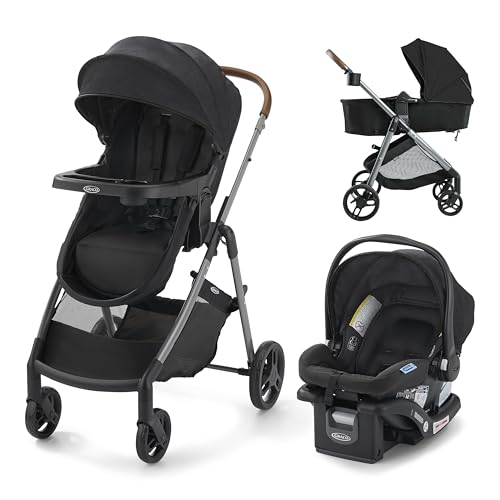
Graco Modes Trio Travel System | Riordan (Black) | 3-in-1 Baby Stroller and Car Seat Combo | Rear-Facing from 1.8-16 kg (4-35 lb)
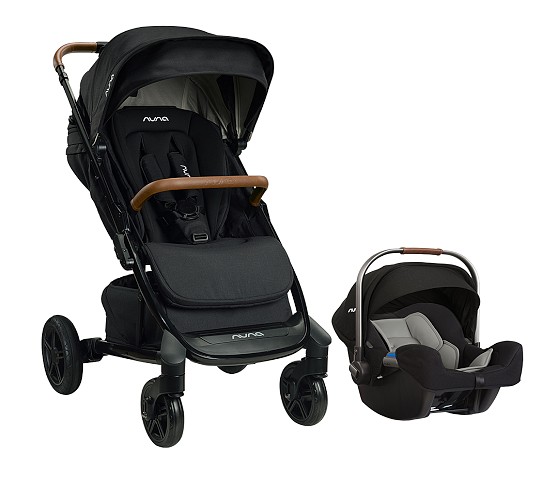
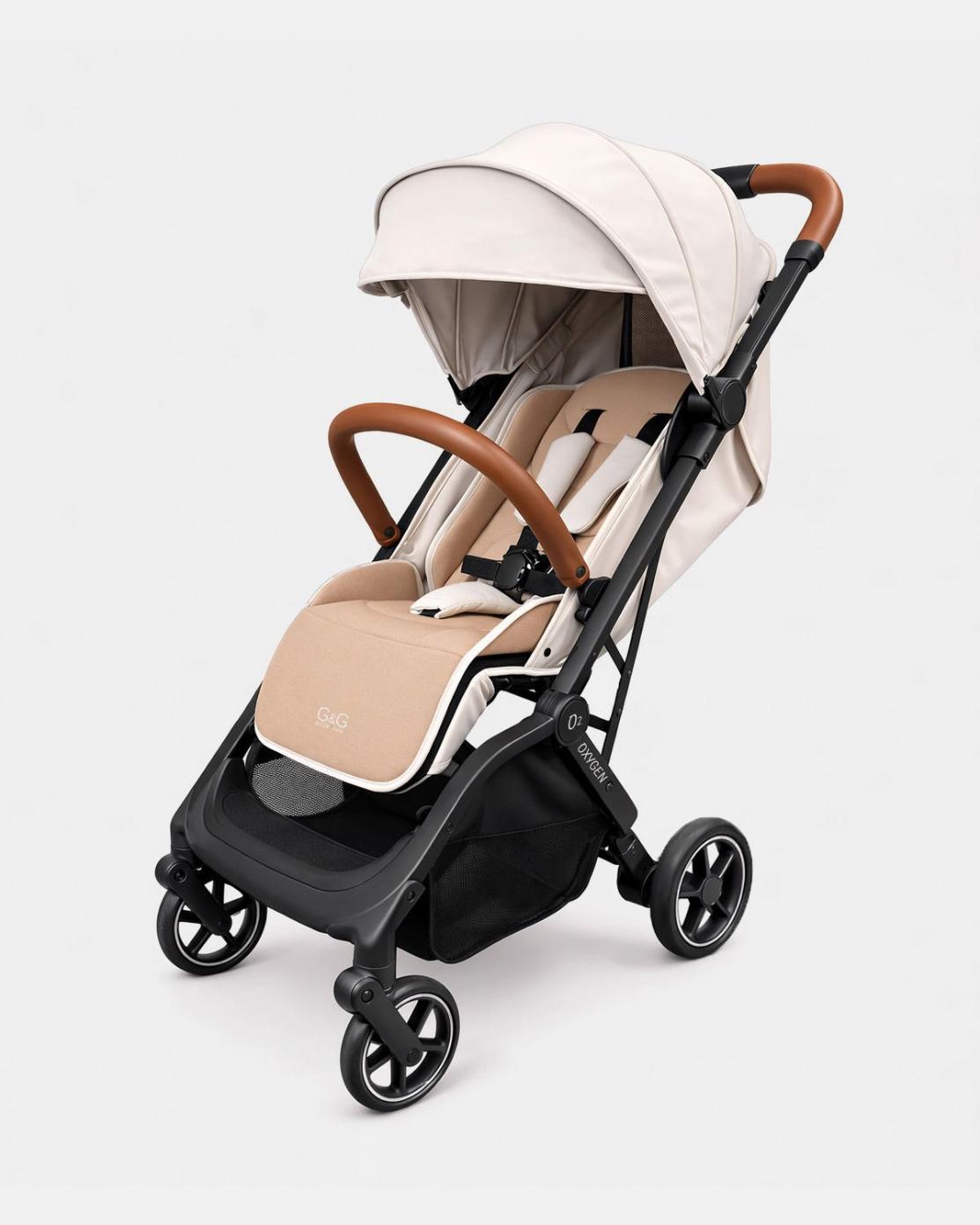
Lightweight / Umbrella / Travel Strollers
These fold small, often with one hand, and are built for portability rather than storage space or plush ride quality. They're a favorite second stroller for travel, quick errands, or grandparents' houses, and some parents use them as a primary stroller in cities where every set of stairs matters. The tradeoff is a smaller basket, less recline, and a bumpier ride on rough pavement.
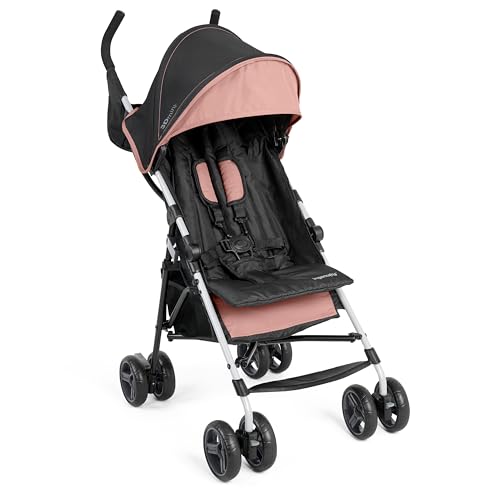
Summer by Ingenuity 3D Mini Convenience Stroller – Lightweight Stroller with Compact Fold, Multi-Position Recline, Canopy with Pop Out Sun Visor and More – Umbrella Stroller for Travel and More, Dusty Rose
Double and Sibling Strollers
Side-by-side and tandem (front-and-back) are the two main layouts. Side-by-side models are easier to keep both kids at the same eye level and tend to be simpler to fold, but they're wider and can struggle to fit through standard doorways. Tandem models are narrower and often accept an infant car seat in one position, but can be longer and heavier to steer.
 Canadian owned/made
TWIN WAY stroller - StrollAir

UPPAbaby Minu Duo Side-by-Side Double Stroller - Lightweight + Compact Design for Travel - Easy Fold- from Birth to Toddler - Independent Recline - Jake (Charcoal/Carbon Frame/Black Leather)

Convertible / Modular Strollers
These are designed to grow with your family - many can run as a single stroller, add a toddler board or second seat later, or reconfigure the seat to face forward, face you, or lie flat for a newborn. They're a strong option if you're planning multiple kids close in age, but they come at a higher price point than a single-purpose stroller.
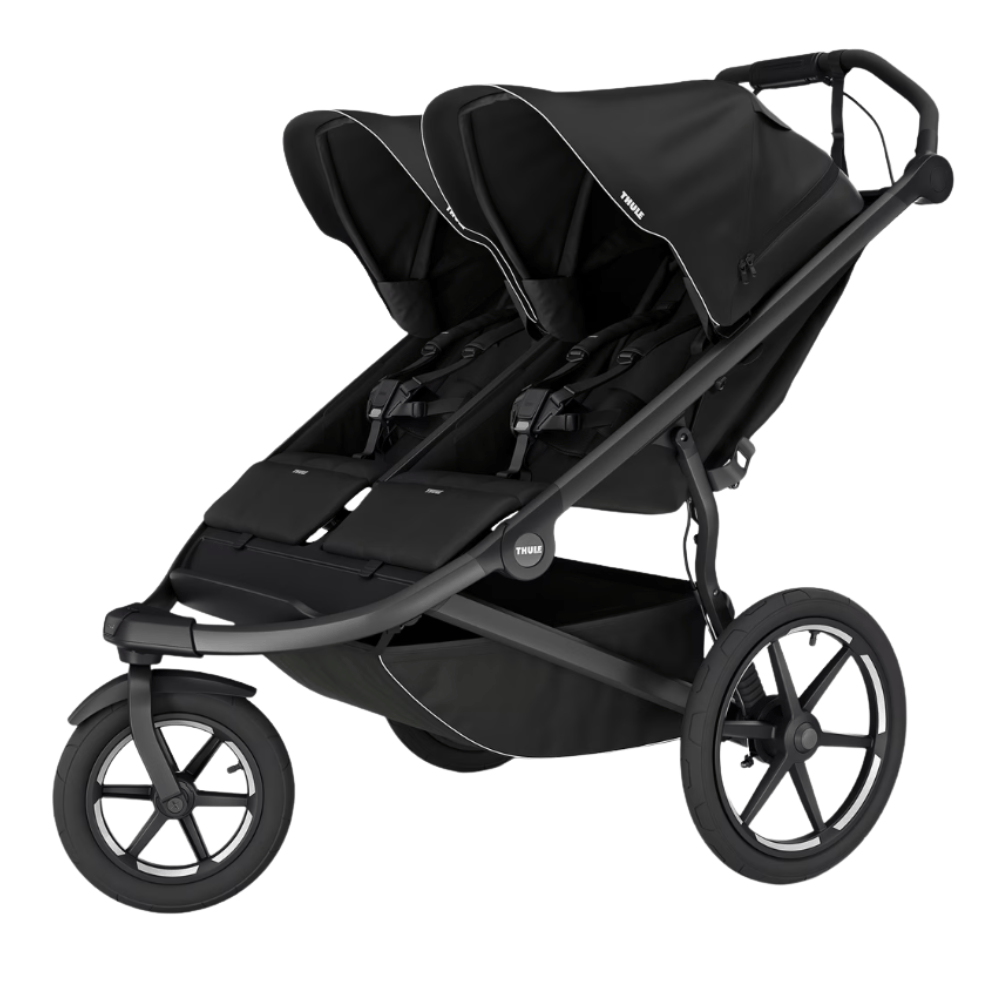
Jogging Strollers
Built with a fixed or lockable front wheel and larger air-filled or foam tires, jogging strollers are designed to handle real running speed and uneven terrain without tipping. Most aren't recommended for babies under 6-8 months due to lack of neck support, so many running parents pair an infant seat adapter for early months or wait until the baby can sit up. The tradeoff is size and turning radius - they are not built for tight indoor spaces.
Smart AI Powered Strollers
The opposite of a jogging stroller, a newer category built around smart motorized assistance and built-in soothing features rather than manual push power alone. These strollers use motors to help with hills and longer walks, and some add extras like auto-rocking or white noise to settle a fussy baby without you having to do the work. The tradeoff is price and weight.
Common mistakes to avoid
Not measuring your trunk space or apartment hallway before buying - fold dimensions vary more than most people expect. Just because a stroller is top rated doesn't mean I will work for your situation.
Buying based on newborn needs alone and ending up needing a second stroller within a year - check how the seat and recline work at 12, 18 and 24 months too.
Our top picks
Highly rated options from the Tinybean catalogue you can add to your registry.

Bugaboo Butterfly 2 Travel Stroller, Ultra-Compact One-Second Fold, Lightweight and Airplane-Friendly (Heritage Black)
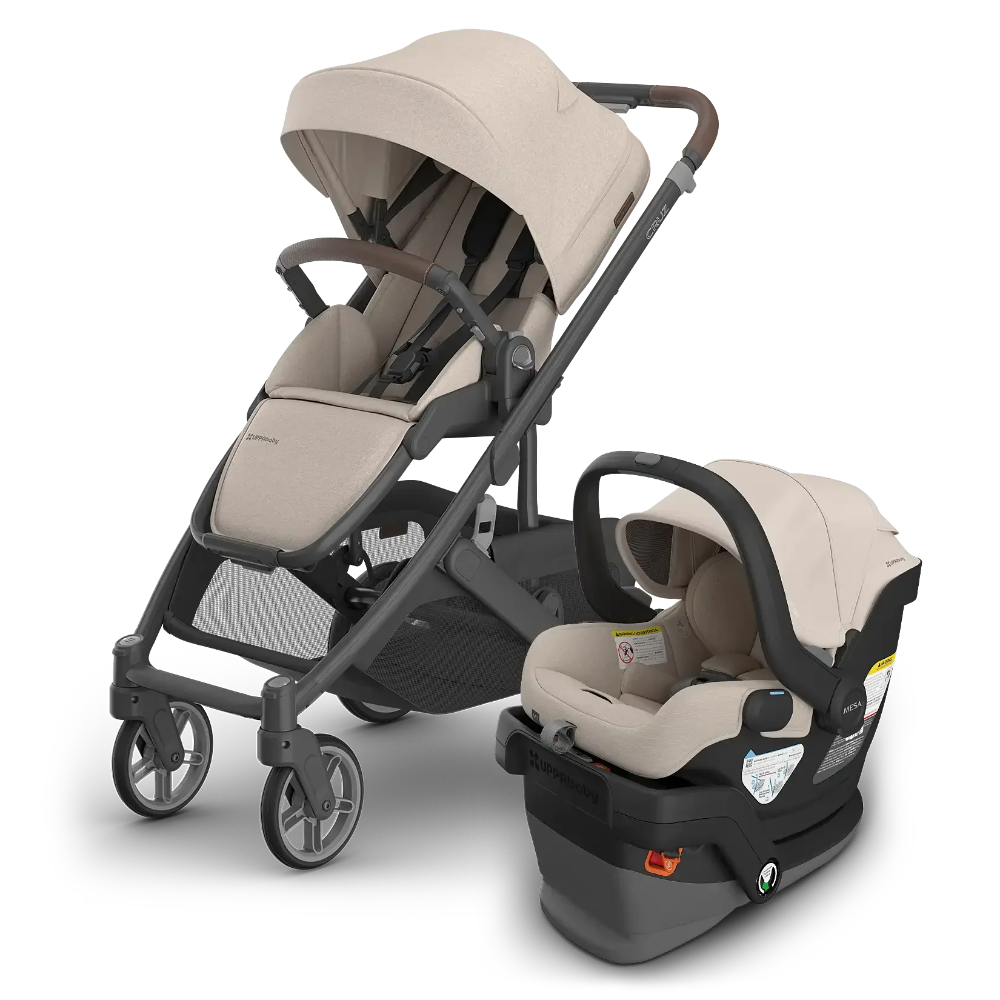
UPPAbaby - Cruz V3 + Mesa V3 Travel System
 Canadian owned/made